Comparison
How to choose a reading tracker app
Goodreads, StoryGraph, Margins, Bookmory, Bookly, and Nous — what each one tracks, what it costs, and where your notes end up.
July 23, 2026 · 10 min read
Reading and book trackers are all tools to help you keep tabs on what you’re reading. In practice they split into a few distinct kinds: social catalogues, stats dashboards, timers and habit trackers, and ones that give you the tools to get more out of reading. It’s therefore important to know why you want to use a reading tracker, as this will inform which platform you get the most value from.
This comparison covers six trackers — Goodreads, StoryGraph, Margins, Bookmory, Bookly, and Nous.
Short version, if you just want an answer:
- Finding books and reading with friends: Goodreads
- Stats and recommendations: The StoryGraph
- An aesthetic reading experience and good all-rounder: Margins
- A private reading log with all the basics covered: Bookmory
- Building a daily habit with streaks and gamification: Bookly
- Remembering what you read: Nous
Comparison table
| Best for | Price | Session timer | Notes & capture | Export | Rating | |
|---|---|---|---|---|---|---|
| Goodreads | Social discovery | Free (ads) | No | Reviews only | CSV (lossy) | 4.8 (737K) |
| StoryGraph | Stats & moods | Free · Plus $4.99/mo | No | Private notes | CSV | 4.5 (3.5K) |
| Margins | Aesthetic all-rounder | Free · Plus $5.99/mo | Yes | Ratings only | None | 4.9 (18K) |
| Bookmory | Private stats log | Free (ads) · $3.49/mo | Yes | Typed + photo OCR | xlsx backup | 4.8 (16K) |
| Bookly | Gamified habit | Free (10 books) · $29.99/yr | Yes | Quotes, voice, OCR | PDF report | 4.6 (60K) |
| Nous | Remembering what you read | Free · optional Plus | Yes | Session notes, on-device voice | Markdown / Obsidian sync | New in 2026 |
Popular & social reading trackers
The first three reading trackers contain some of the most well-known, being Goodreads and StoryGraph. Another less well known, yet increasingly popular option, is Margins. The thread between these platforms is that they are best for social tracking, by letting you follow friends and influencers, and they also excel at providing ideas for what to read next through discovery and recommendations.
1. Goodreads — best for social discovery
Price: free with ads · Platforms: iOS, Android, web · App Store rating: 4.8 from 737K reviews
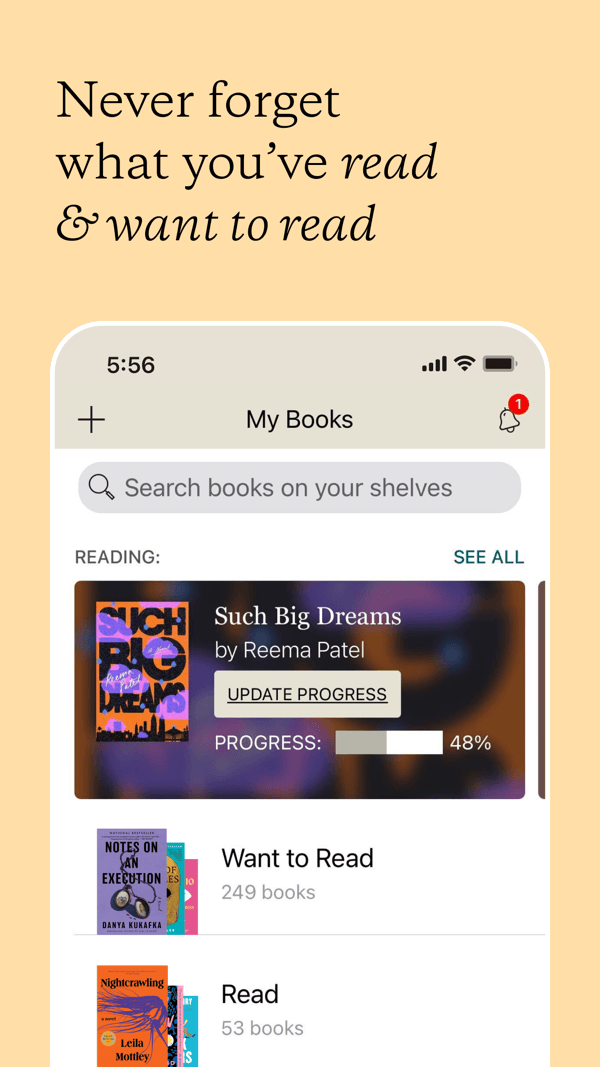
Goodreads still has the largest reader base. Shelves, reviews, the annual Reading Challenge, and great Kindle integration. The 2025 redesign — its first in roughly two decades — cleaned up the apps, and there’s now a DNF shelf.
As a tool for your own reading, it’s limited. There’s no session tracking, no time data, and no note capture beyond public reviews. Still no half-star ratings, either. The CSV export drops start dates and re-reads, which matters once you have a decade of history in there and want to move it somewhere else. It’s also Amazon-owned, which some people have qualms about.
Pick Goodreads if you want the easy default option with the largest social network. This is especially true if you are into reviewing books, as this is where you can see and post reviews that will be seen by others.
2. The StoryGraph — best for stats and recommendations
Price: free · Plus $4.99/mo or $49.99/yr · Platforms: iOS, Android, web · App Store rating: 4.5 from 3.5K reviews
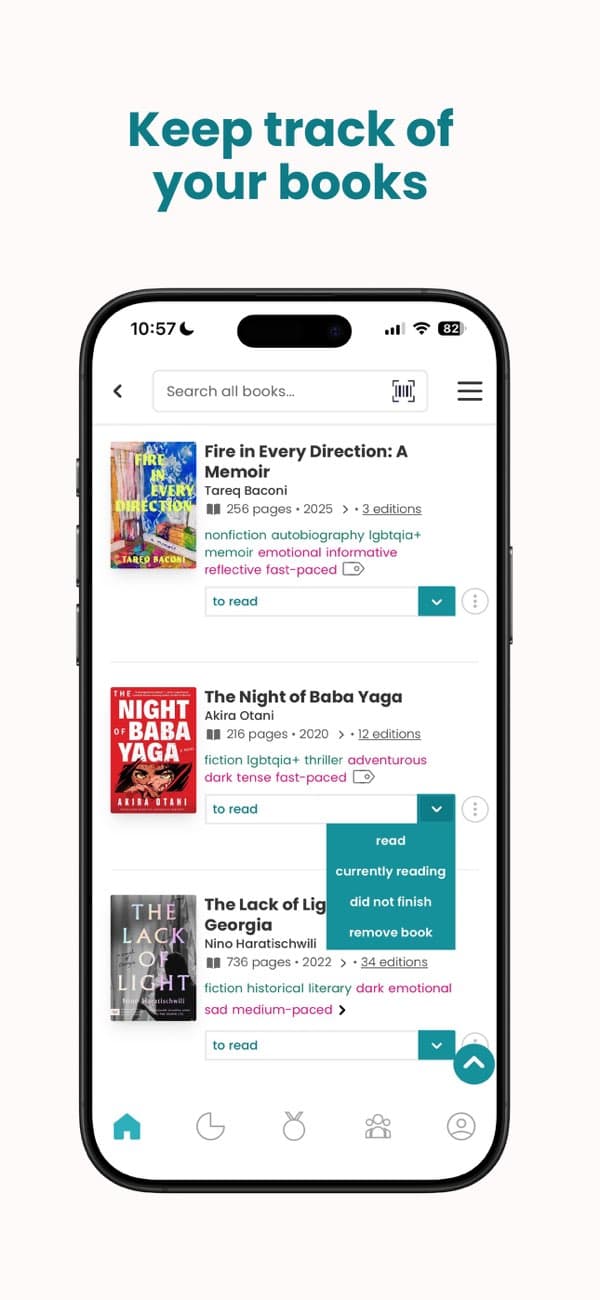
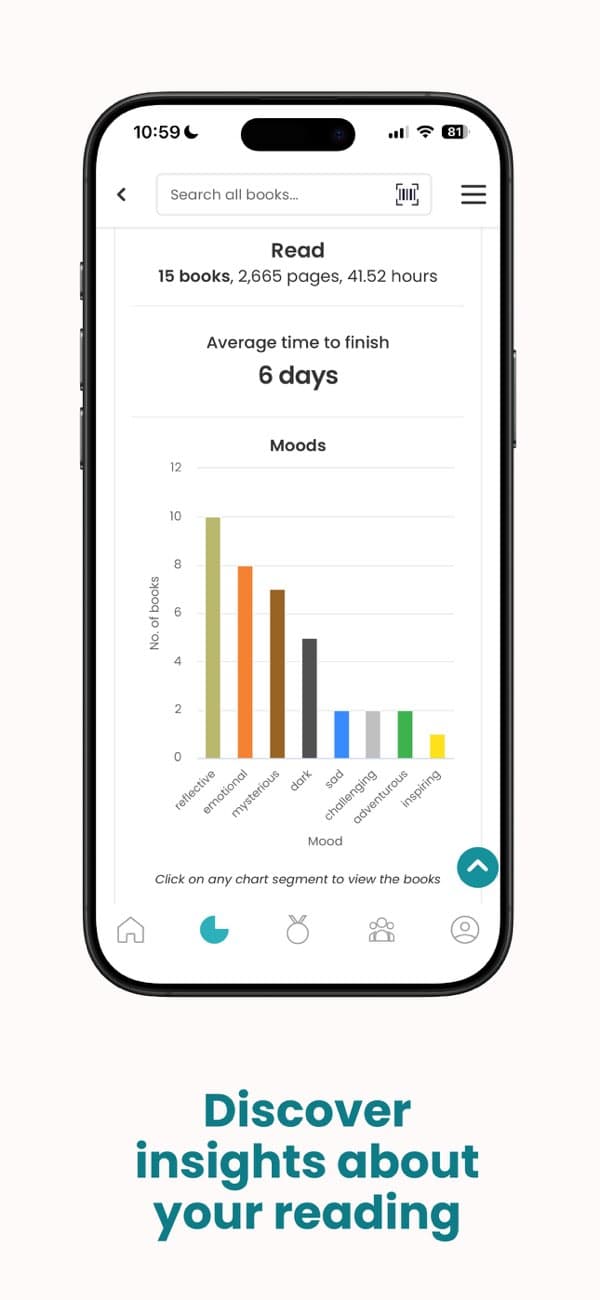
The StoryGraph is the strongest Goodreads alternative: independent, with mood and pace-based recommendations, content warnings, buddy reads, and the best reading statistics in the category. It has built quite the cult following for these features, with users who are nerdy about stats and who wish to steer clear of Amazon-owned platforms.
These features make The StoryGraph fantastic for finding reads and tracking your basic reading life. However, it doesn’t give you the ability to track reading sessions, and offers limited tools to properly engage with your books.
Pick The StoryGraph if you love charts, want better recommendations than Goodreads, and don’t need to track your reading sessions in real time.
3. Margins — best all-rounder + aesthetics
Price: free · Plus $5.99/mo or $59.99/yr · Platforms: iOS, iPad · App Store rating: 4.9 from 18K reviews
Margins has a little bit of everything. It’s a relatively new book tracker, with rightfully raging popularity. One of the principal focuses of Margins is to be a beautiful and homely reading experience. You can track your reads, organise your library, and — since a recent update — follow your friends’ reading.
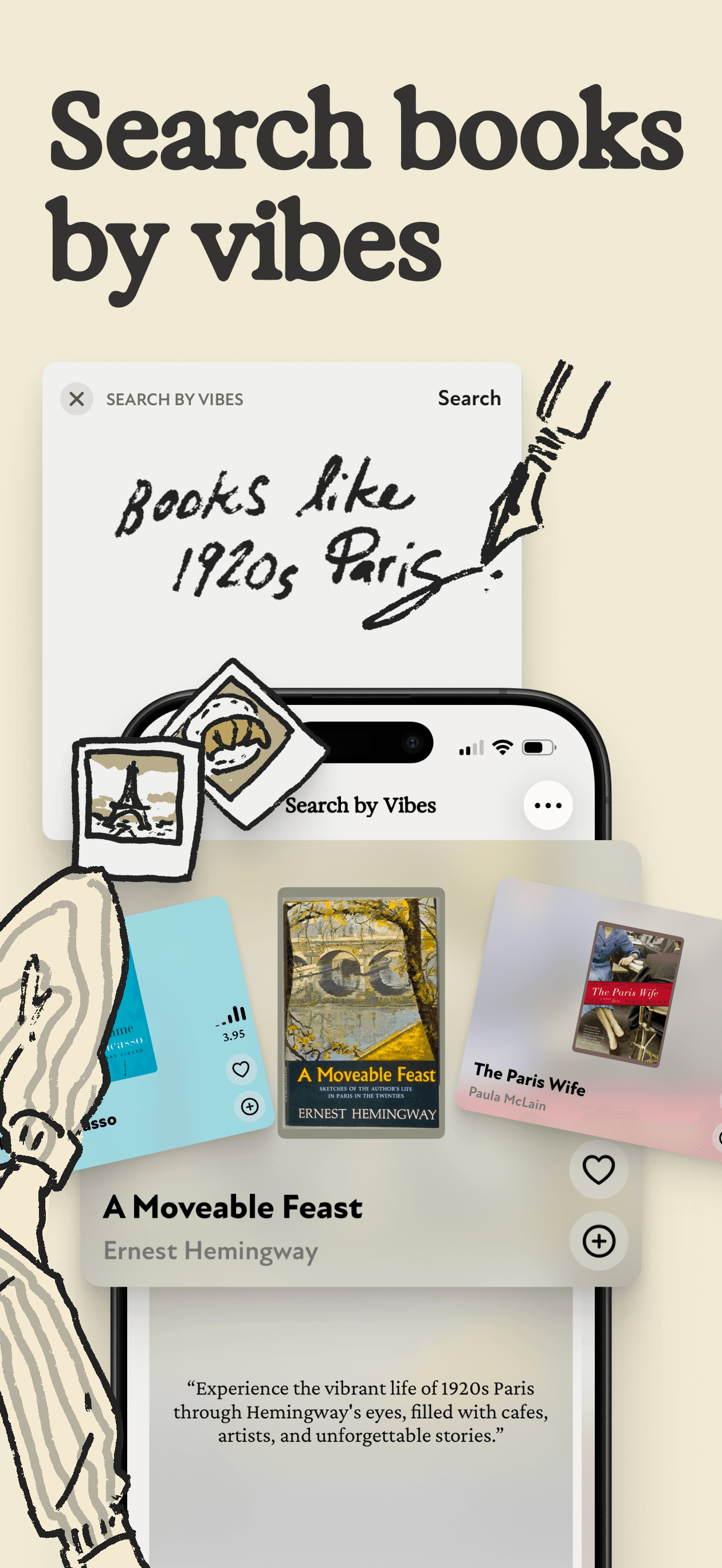
The flagship feature of Margins is its vibes-based discovery. You can select from already-generated ‘vibes’, or you can create your own. You’re then given a selection of books related to that idea. This is a fresh and exciting way to discover new books, and lets you find fascinating entries into new worlds.
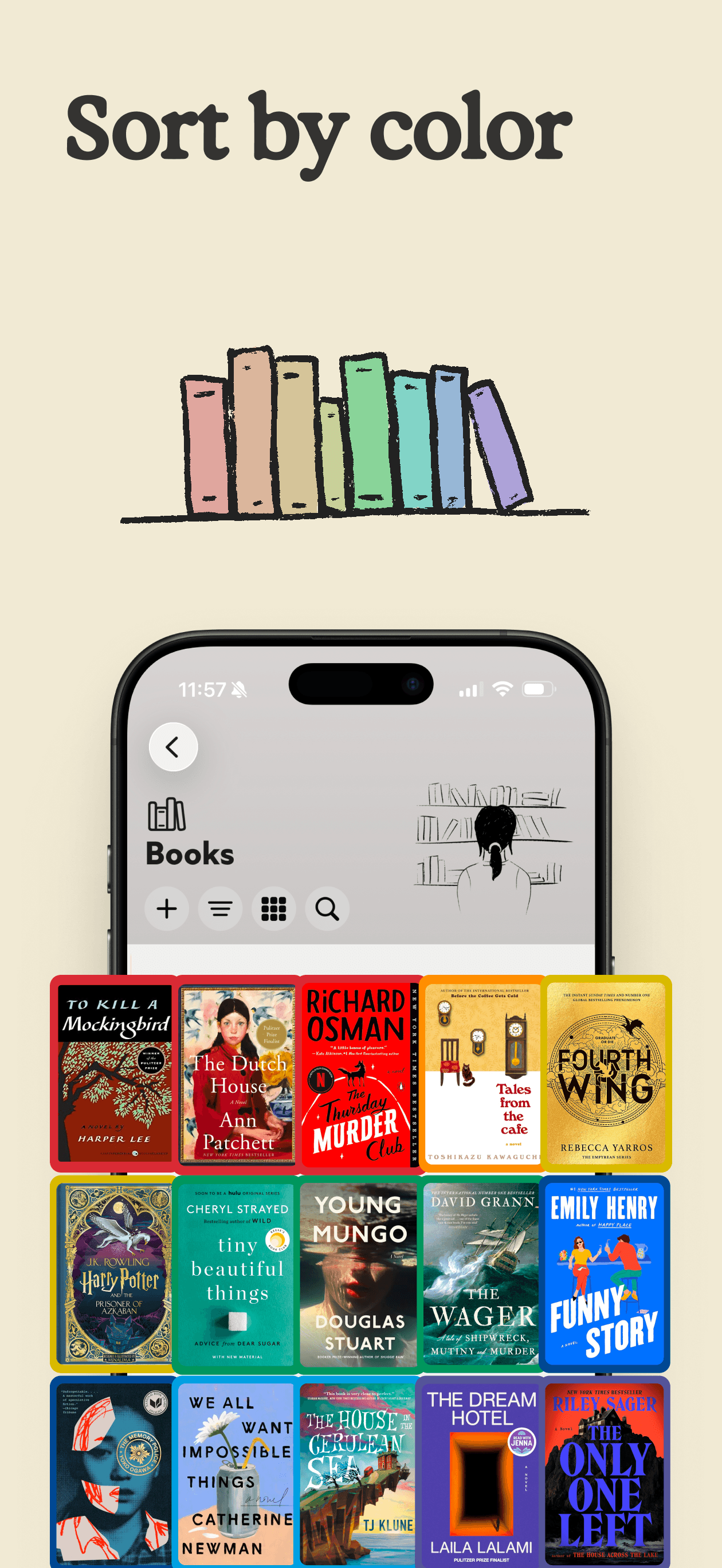
Other novel features — selecting from a range of book covers, a social-media-disabling ‘reading meditation mode’, and creating a penciled-in portrait for your profile page — make Margins a bit of fun.
Alongside Goodreads and The StoryGraph, Margins also lacks the ability to take notes in real time and add highlights and other information to your books. This is where the next three reading trackers come in.
Personal & learning-focused reading trackers
The next three reading trackers occupy a similar territory. They are all focused less on social features, and instead on being a personal reading tracker — where you can organise your reading, take notes and highlights, and find ways to motivate yourself along the way.
These aren’t built to maintain a following or read other critics’ reviews; they are designed so that individuals can get the most out of their reading. They lean more learning-focused, with strong returns for power-users who can not only track their reading, but extend the insights and things they wish to remember into other systems beyond them.
4. Bookmory — best private reading log
Price: free with ads · $3.49/mo or $30.99/yr · Platforms: iOS, iPad, Mac, Android · App Store rating: 4.8 from 16K reviews
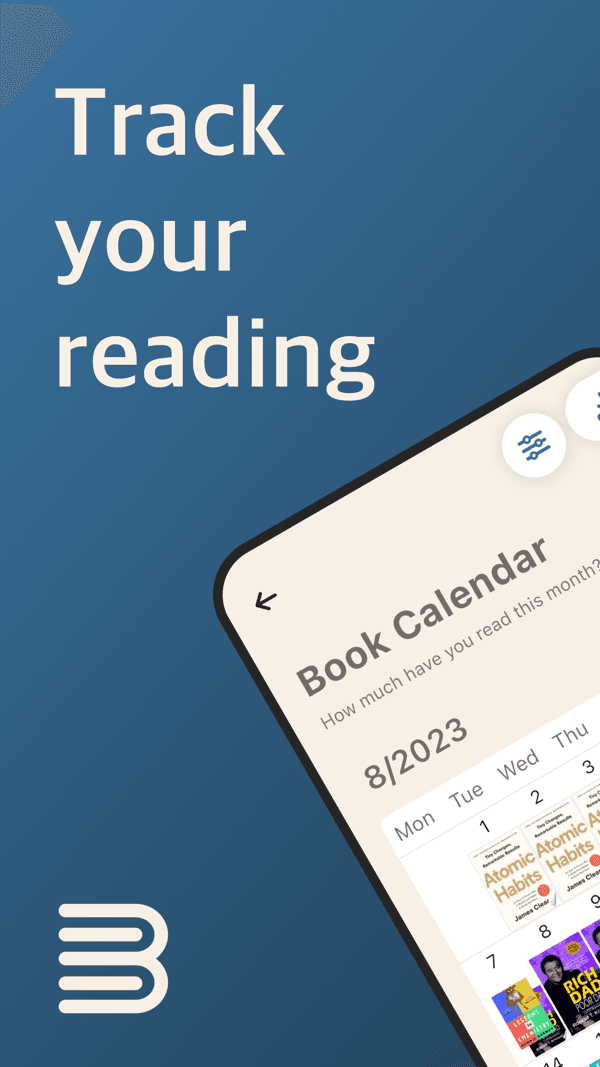
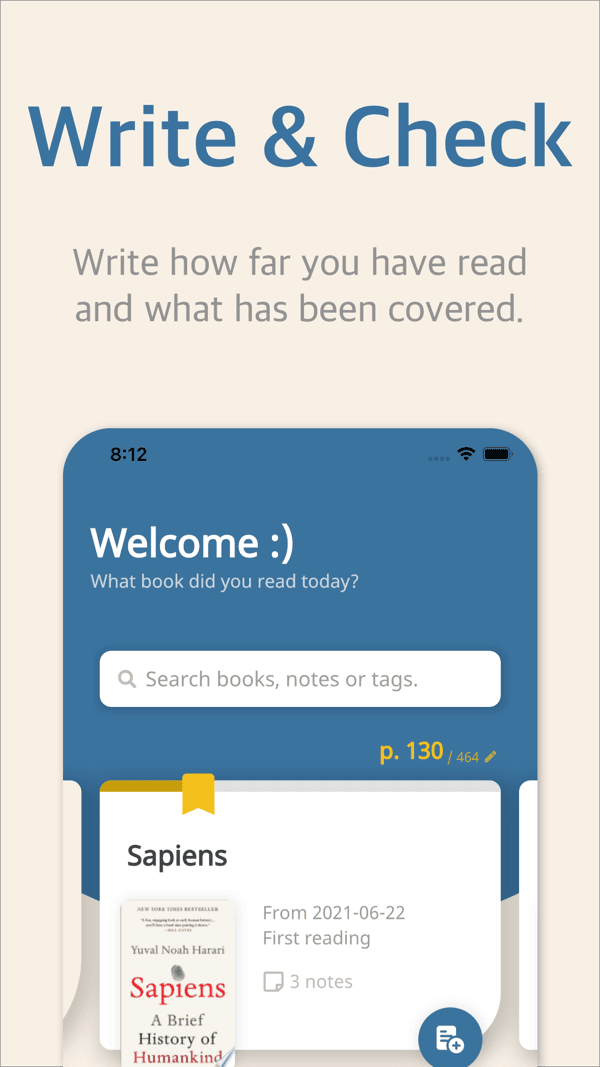
Bookmory is a personal reading tracker with a session timer, page logging, goals, and streaks. Its primary strength is its note-taking — a rich-text journal, quote highlights, and OCR that can pull text from a photo of the page. It also has a notes feature that draws random highlights and notes from your collection, which can help reorient you with what you’ve read before.
It does have clear limits: no voice capture, ads on the free tier, and export via backup files — fine for safekeeping, but not useful if you want your notes in a notes app.
Pick Bookmory if you want a private log with a timer and don’t need your notes to go anywhere else.
5. Bookly — best for streaks and gamification
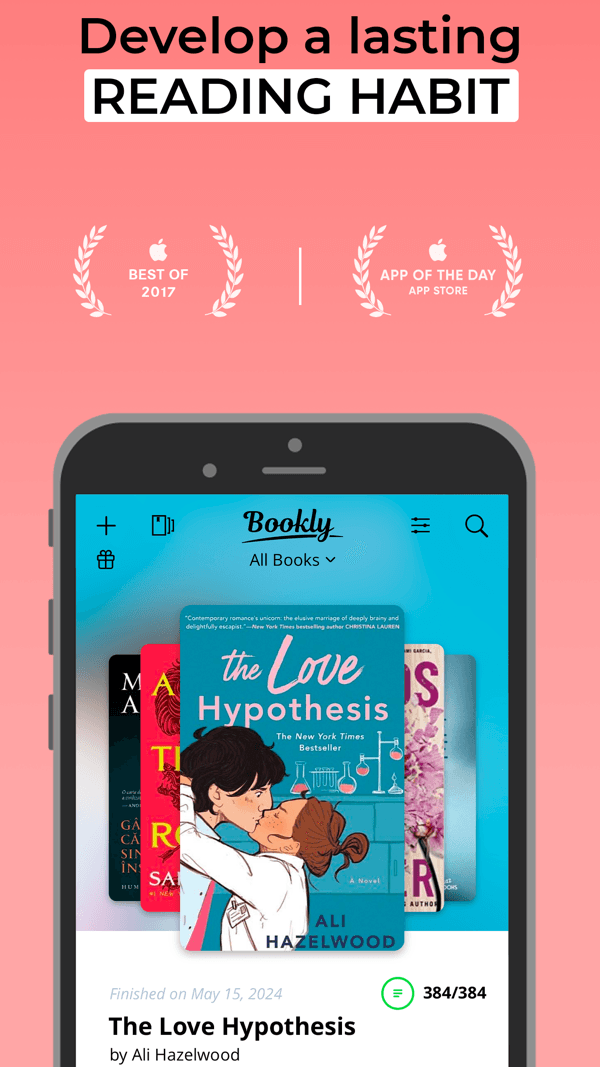
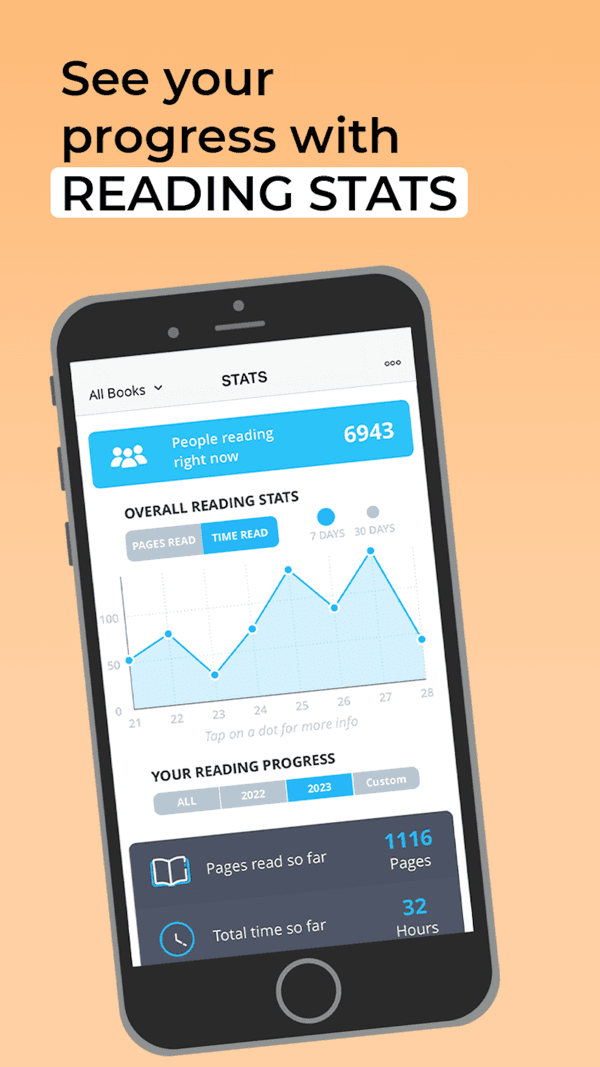
Price: free (10 books) · Pro $29.99/yr · Platforms: iOS, Mac, Android · App Store rating: 4.6 from 60K reviews
Bookly is a colourful reading tracker with gamification: a session timer at the core, reading-speed stats, time-to-finish forecasts, streaks, badges, and in-app currency you earn to buy cute outfits for a mascot. Capture during a session is strong — quotes and thoughts by typing, dictation, or camera.
The free tier is limited: ten books and no iCloud/cross-device sync, so serious use effectively requires the subscription. And export is a per-book PDF report — fine for reading back, but your quotes and notes don’t come out in any format another tool can import.
Pick Bookly if streaks and stats are what keep you reading and you don’t plan to take your notes with you.
6. Nous — best for remembering what you read
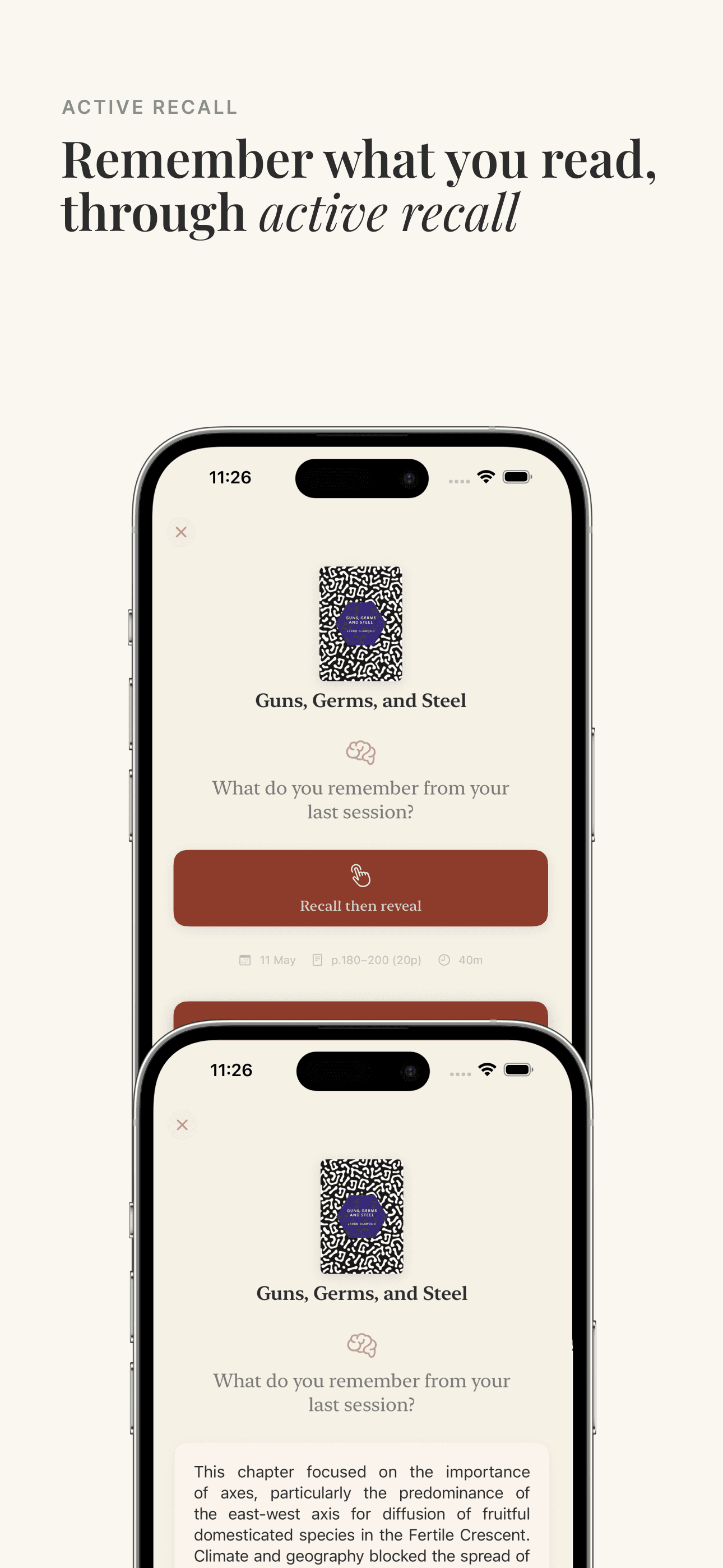
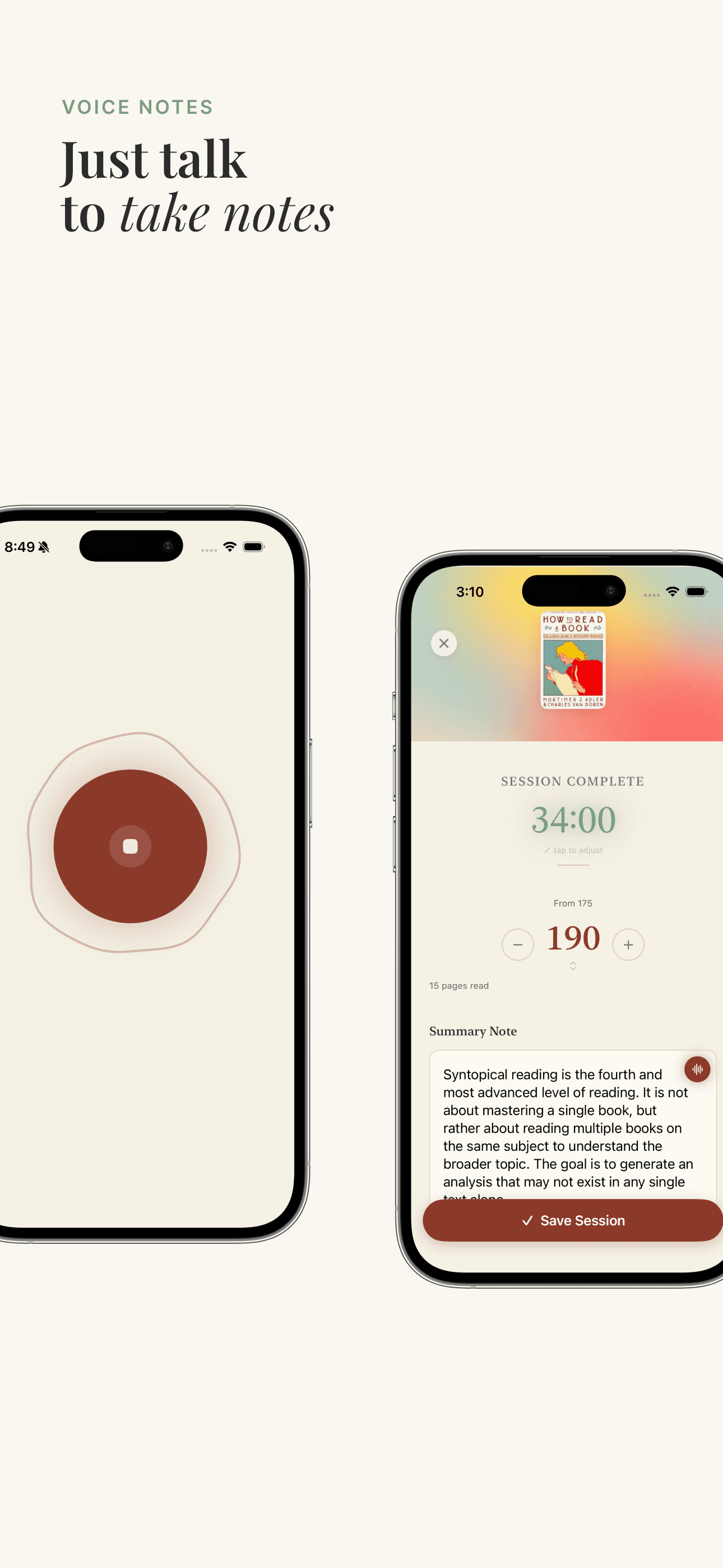
Price: free · unlimited books and sessions · Plus $29.99/yr · Platforms: iPhone, Apple Watch · App Store rating: new in 2026
Nous is newly released in 2026. It exists because of a pattern you might have noticed in everything above: every app measures reading, but none of them does anything to help you retain it. Highlights get saved but are rarely resurfaced. There are no recall prompts and little to bridge finishing a book and remembering it.
Nous is organised around reading sessions, like Bookmory and Bookly — but each session opens by asking what you remember from last time, with your previous notes hidden until you’ve answered. That’s retrieval practice, the most consistently supported technique in the learning-science literature.1 You can capture thoughts and ideas in one tap or one spoken sentence, transcribed on device and further refined using AI. Sessions close with a short reflection, so you can truly understand what you’re engaging with.
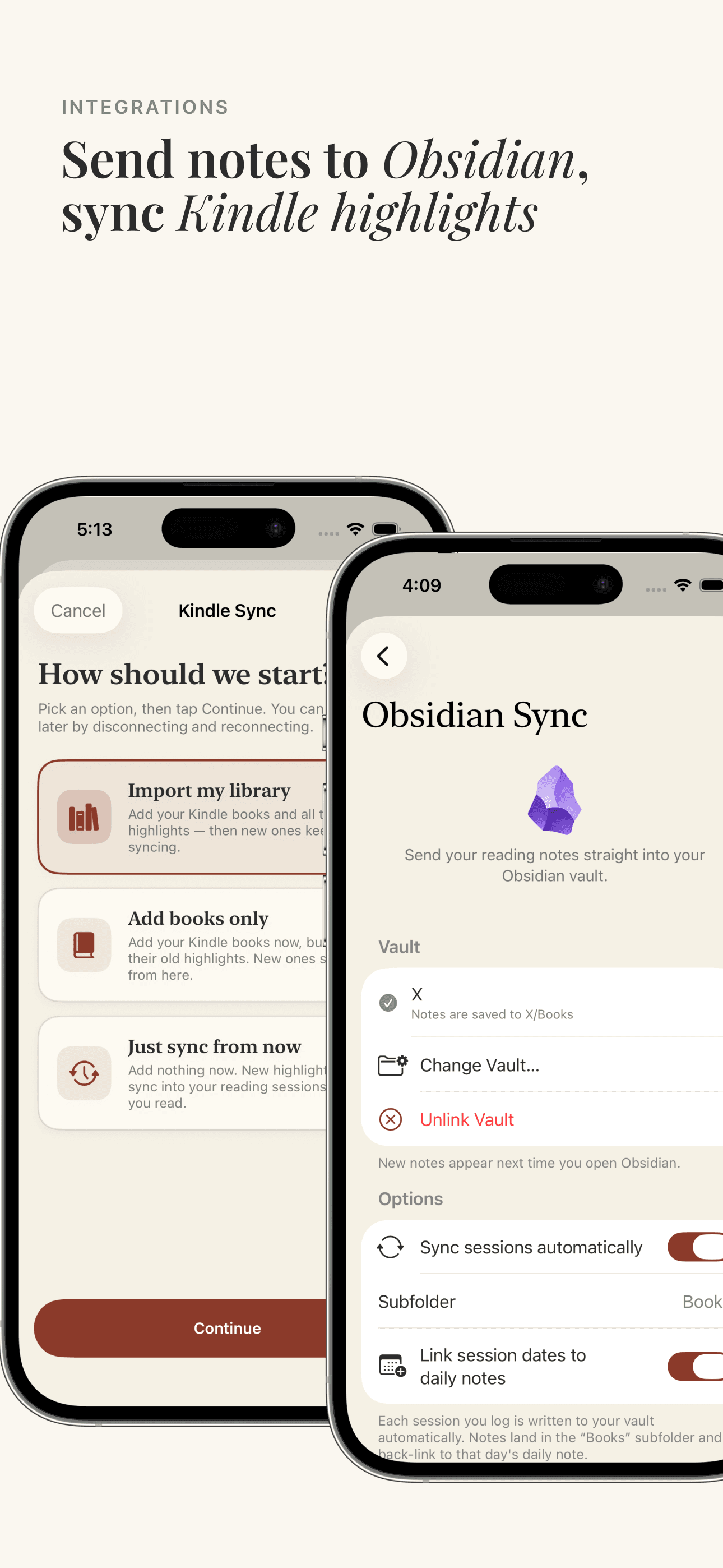
Your notes and thoughts are yours, so Nous gives you the tools to export your thinking elsewhere. Notably, connect Nous to your Obsidian vault and you have an entire system for taking notes while you read. There’s also import from Goodreads and StoryGraph so you don’t start from zero. No ads, no social feed, little gamification.
How to choose
Ask what you actually want from tracking. If the answer is “a record and some recommendations,” Goodreads, The StoryGraph, and Margins will serve you very well. If the answer is “more minutes read per day,” Bookly and Bookmory are built for exactly that. If the answer is “I keep finishing books and remembering nothing,” a social app won’t fix it — you need something that helps you retrieve and re-encounter your own notes, and Nous will be your best pick.
Frequently asked questions
What is the best reading tracker app in 2026?
It depends what you track for. Goodreads is best for social cataloguing and discovery, StoryGraph for reading stats and recommendations, Margins for an aesthetic shelf experience, Bookly for building a daily habit with streaks, Bookmory for a private log, and Nous for actually remembering what you read through recall prompts, session notes, and capturing ideas through talking and dictation.
What is the best free alternative to Goodreads?
StoryGraph is the most complete free alternative, with better stats and mood-based recommendations. Nous is also free and imports your Goodreads library, and adds session tracking and active retrieval that Goodreads doesn't have.
Which reading trackers have a session timer?
Margins, Bookmory, Bookly, and Nous all have built-in reading session timers. Goodreads and StoryGraph don't — StoryGraph has had a timer on its public roadmap for years.
Which reading tracker syncs with Obsidian?
Nous is the only tracker in this comparison that writes your notes and highlights directly into an Obsidian vault, and keeps it synced as you expand your thinking. The other apps export CSV, xlsx, or PDF at best.
Can a reading tracker help you remember what you read?
Only if it prompts retrieval. Research on the testing effect shows that recalling material strengthens memory far more than re-reading it. Most trackers only record what you read; in Nous you open each session by asking what was remembered from the last one.
Reading that stays with you
Nous is a reading tracker for readers who want to grow — recall, capture, and reflect around every session. Free on iPhone and Apple Watch.